Early Innovation on Land and Sea: Clyde Wilkerson’s 1906 Amphibian Motor Vehicle
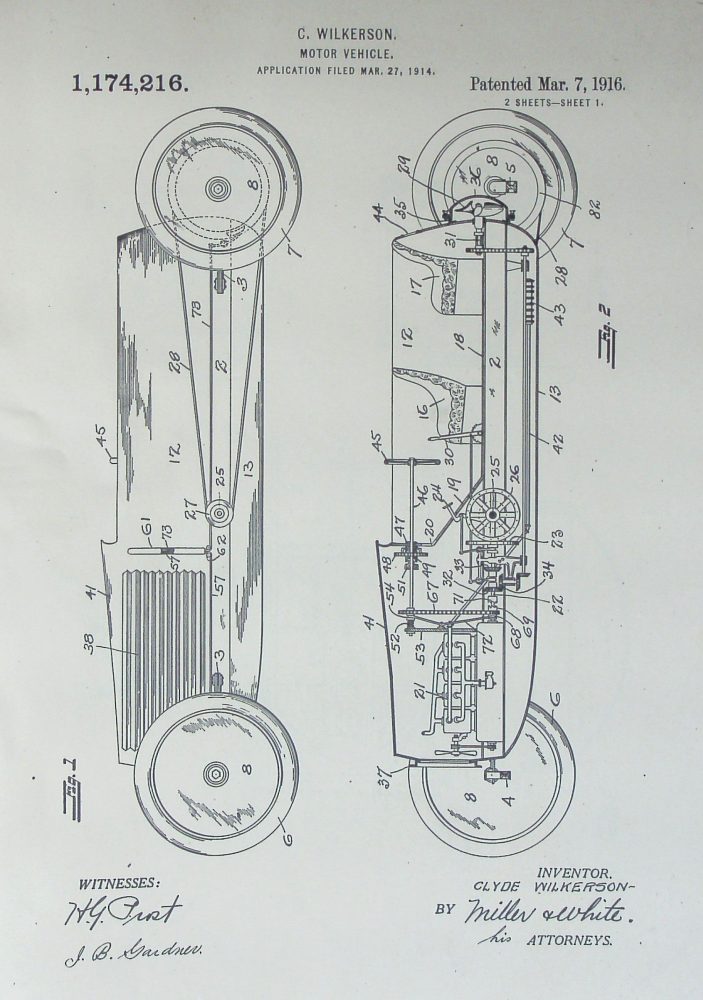
In the early 20th century, long before duck boats became tourist staples or military engineers perfected amphibious vehicles, inventor Clyde Wilkerson of San Francisco had a bold vision: a motor car that could travel both land and water. On March 7, 1906, he received what may have been the first U.S. patent for an amphibian motor vehicle—a groundbreaking concept for its time.
Wilkerson’s design blended the sleek, narrow profile of a cycle car with the buoyancy and watertight construction of a boat. His vehicle was composed of two main sections, with the lower portion sealed for water travel. All doors and openings were carefully placed above the waterline, and a rear-mounted propeller could be driven by the car’s engine once afloat.
Though little is known about whether Wilkerson’s creation ever hit the streets—or the surf—his patent marks an important milestone in hybrid vehicle design. In an era dominated by steam and early gasoline engines, his forward-thinking design quite literally bridged two worlds: road and river.
Over a century later, Wilkerson’s amphibious dream still makes waves in the history of transportation innovation.
Want to see more vintage innovation? The Merrick Auto Museum preserves rare automotive literature—including original patents—from a time when big ideas were sketched on paper and driven by imagination. Discover more stories that shaped the road ahead.