
1978 Chrysler Kit Car – Racing in a Box
In the late 1970s, Chrysler did something few manufacturers had ever attempted — they offered a complete, factory-engineered, short-track race car you could buy directly through the parts department. The 1978 Chrysler Kit Car program, built on Dodge Aspen and Plymouth Volaré platforms, gave grassroots racers a way to hit the oval with pro-level equipment straight from Detroit.
Originally introduced in 1974, the Kit Car concept was shaped by Chrysler’s success on the Grand National circuit. The goal was simple: make it easier and more affordable for local racers to compete with winning hardware. By 1978, the program had been refined into a menu of packages to suit any budget or skill level.
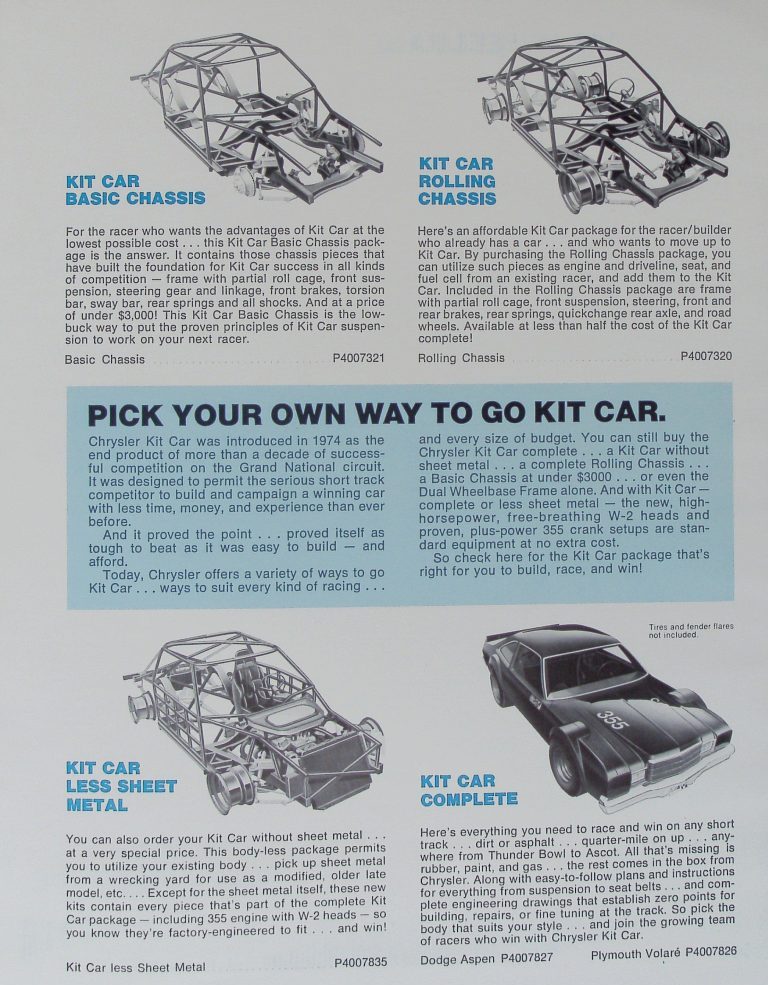
Four ways to buy:
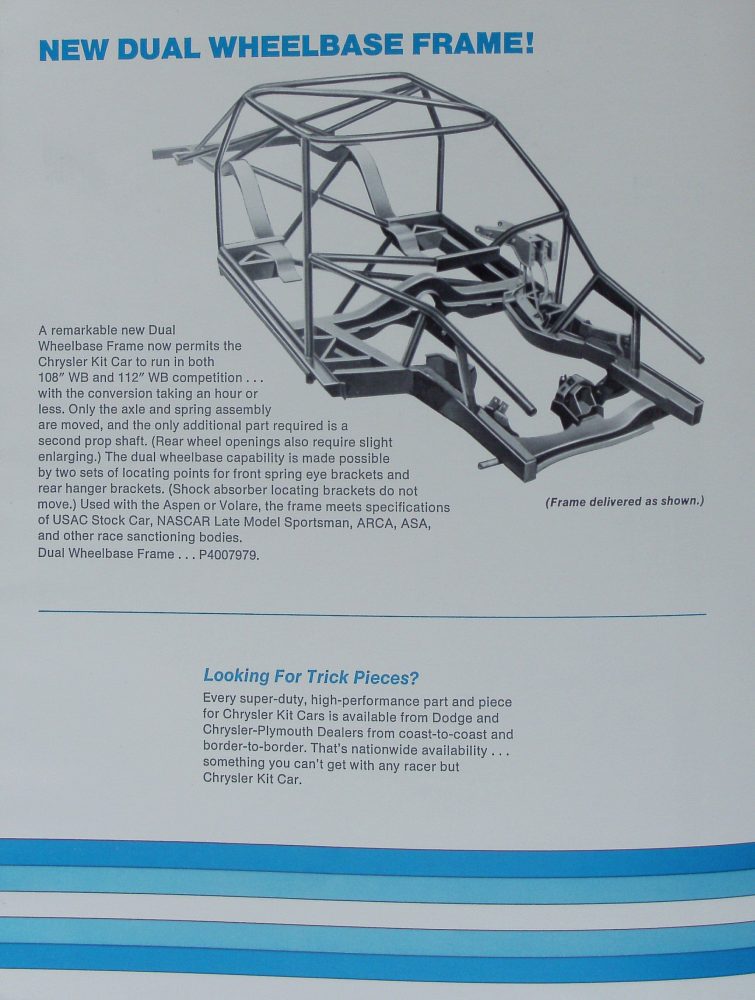
Basic Chassis – A bare frame with roll cage, suspension, steering gear, brakes, and shocks. Affordable entry point for those building their own car.
Rolling Chassis – Adds rear brakes, quick-change axle, and wheels, ready for an engine and body.
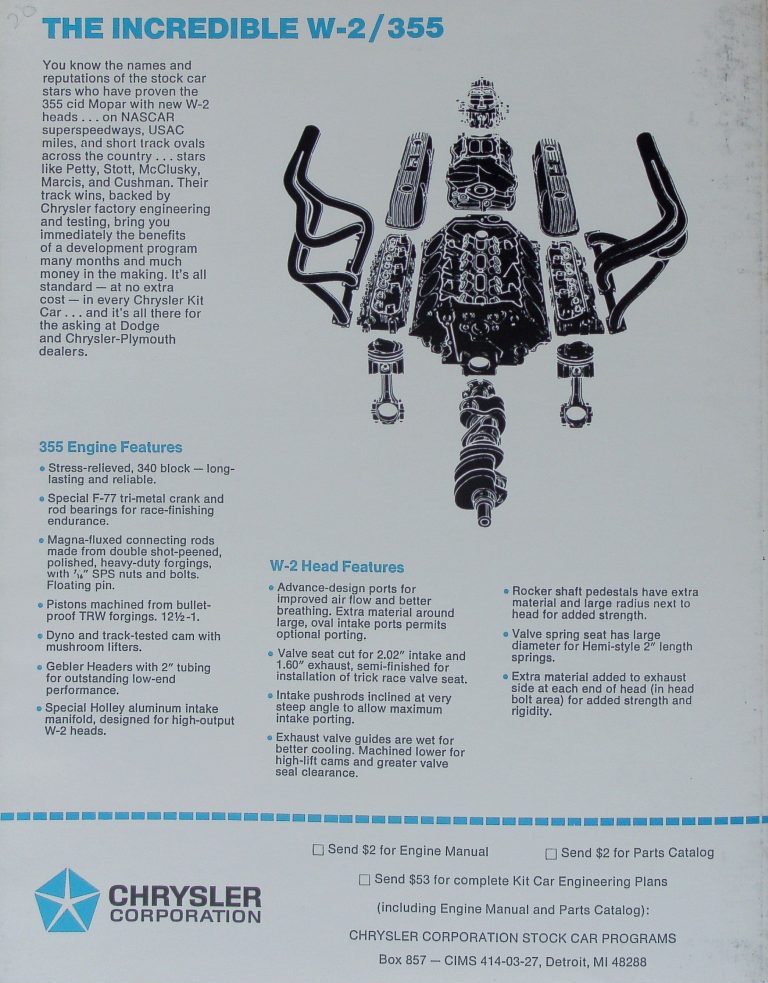
Less Sheet Metal – Includes Chrysler’s 355ci small-block with W-2 heads but leaves body panels to the racer’s choice.
Complete Kit Car – Fully assembled, race-ready car needing only paint, belts, tires, and fuel.
Engineered for dirt and asphalt ovals, the Kit Car used Chrysler’s proven suspension geometry — torsion bars up front, leaf springs in the rear — and a stout V8 designed to take the rigors of weekly competition. Assembly instructions and parts support meant even smaller teams could field a competitive entry without the time and trial-and-error of starting from scratch.
Chrysler also offered a “Street Kit Car,” a limited-production Aspen or Volaré styled like Richard Petty’s NASCAR machine. With flared fenders, spoilers, and bold “43” graphics, it looked ready for the track but ran a street-spec 360ci V8. Fewer than 400 were built, making them collectible oddities today.
Though the program lasted only a few years, the Chrysler Kit Car remains a fascinating example of factory ingenuity aimed at the grassroots racer. For the price of a new sedan in 1978, you could take delivery of a machine designed to win on Saturday night — and many did.
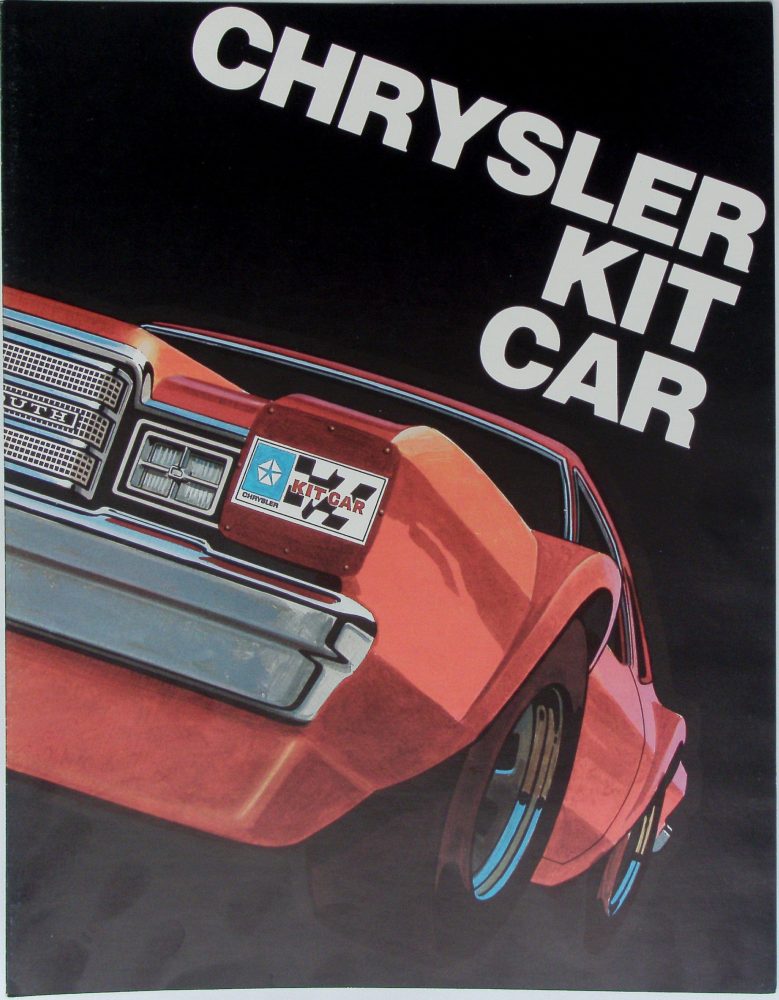
Today, original Chrysler Kit Car literature offers a vivid look back at how the program was pitched to racers and dealers. The sales materials — like the example shown below — outlined each of the four package options, highlighted performance engineering, and captured Chrysler’s unique blend of precision and passion. These brochures weren’t just selling parts; they were selling a dream, showing exactly how you could go from an order form to victory lane.
Sources
Hagerty. 1978 Dodge Street Kit Car Has Richard Petty Written All Over It. Retrieved from https://www.hagerty.com/media/car-profiles/1978-dodge-street-kit-car/
Hot Rod Magazine. Chrysler Kit Car – July 1978. Retrieved from https://www.hotrod.com/features/chrysler-kit-car-july-1978/
Chrysler Corporation. Chrysler Kit Car Sales Folder, 1978. MAM 2025.08.100
Autoevolution. Rare 1978 Plymouth Volaré Kit Car. Retrieved from https://www.autoevolution.com/news/rare-1978-plymouth-volare-kit-car-has-richard-petty-written-all-over-it-186818.html
Want to see more vintage racing history?
The Merrick Auto Museum preserves rare automotive literature—including original factory sales materials like this 1978 Chrysler Kit Car folder—from an era when performance was built in the shop and sold through the parts counter. Discover more stories that put speed, style, and innovation on track.