The Real Fun of Driving:
1965 Chrysler-Dodge Comic Advertising Book
During the mid-20th century, comic books were everywhere—sold at drugstores, read in classrooms, and passed around by teenagers. Companies quickly realized that the format wasn’t just entertainment; it was also a powerful way to communicate ideas. By the late 1950s and early 1960s, businesses, government agencies, and even the military were producing educational and promotional comics designed to reach young audiences.
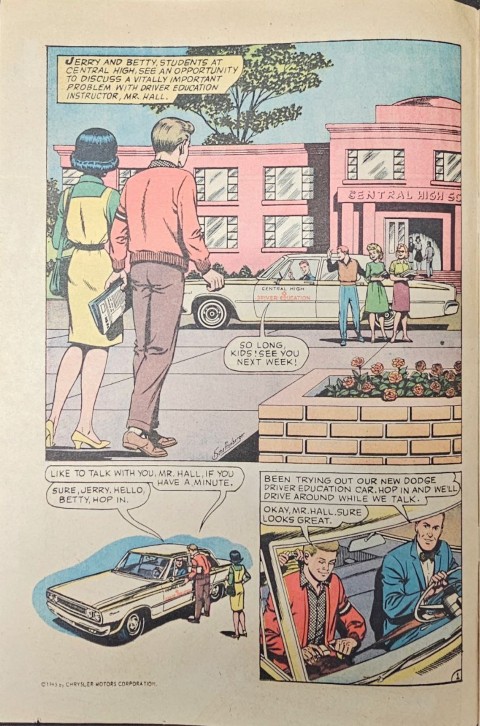
Chrysler Motors Corporation joined this trend with “The Real Fun of Driving!!,” a colorful comic created to speak directly to the new, future drivers and highlight their new 1965 Dodge line-up.
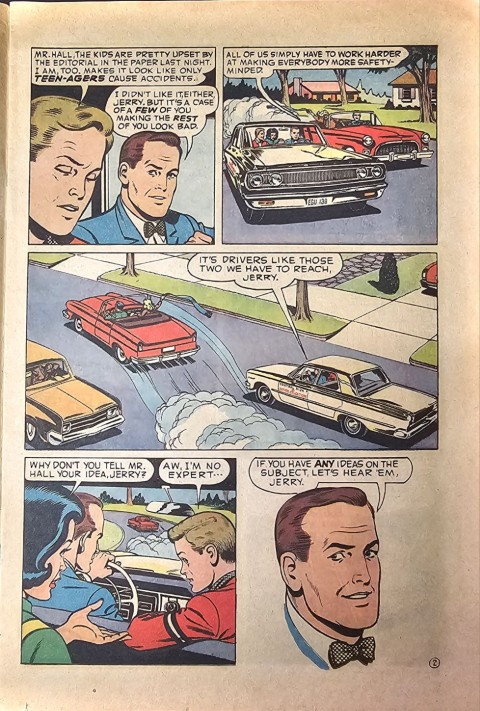
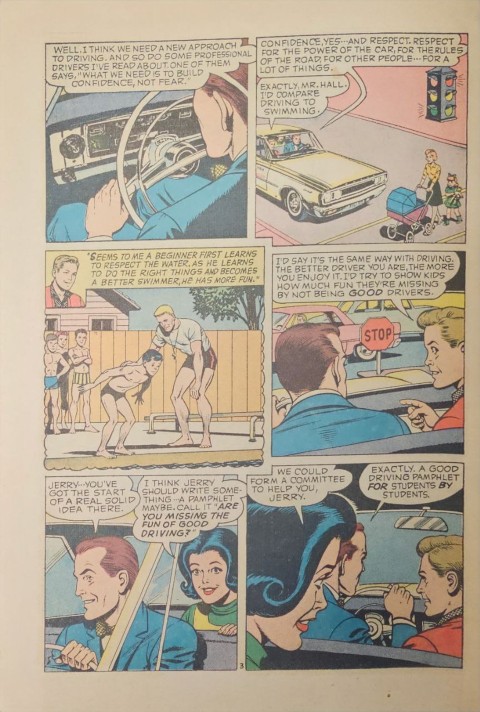
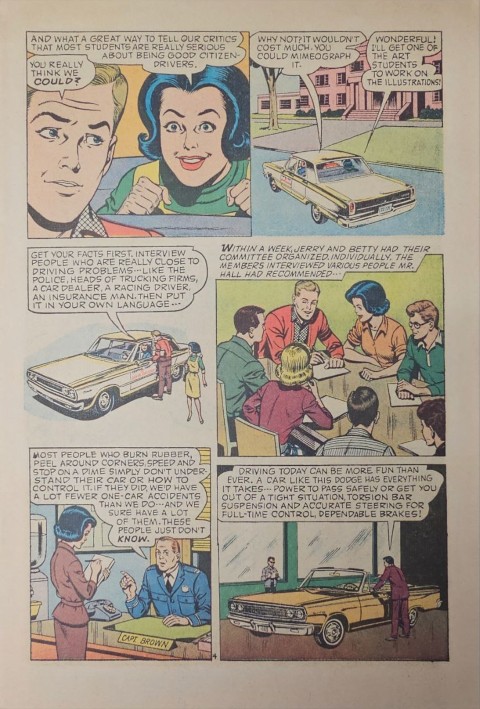
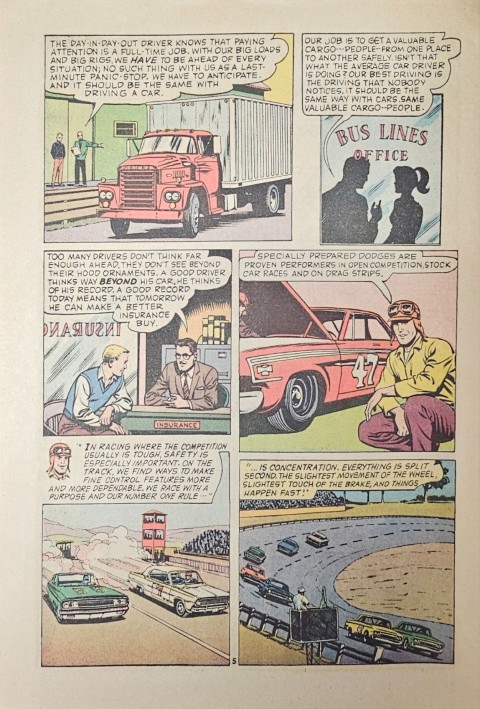
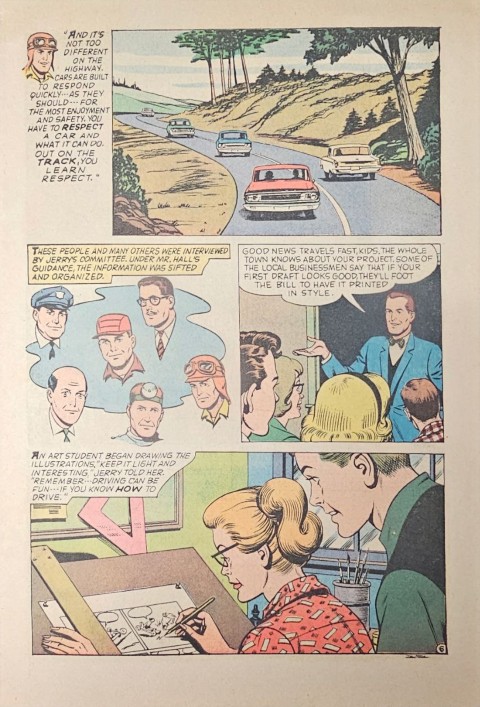
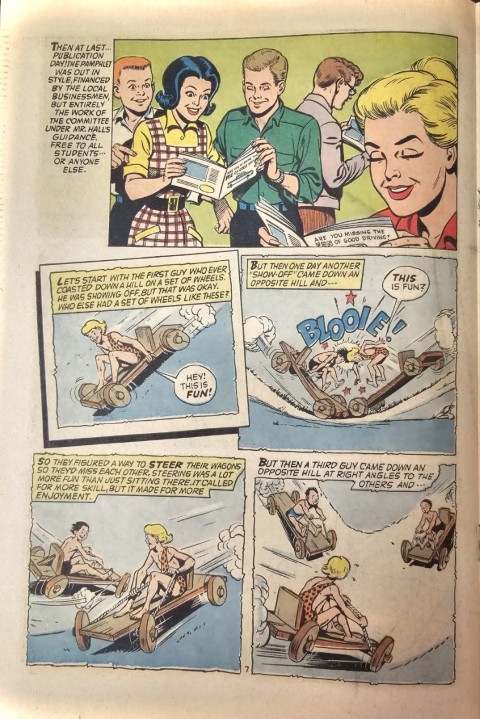
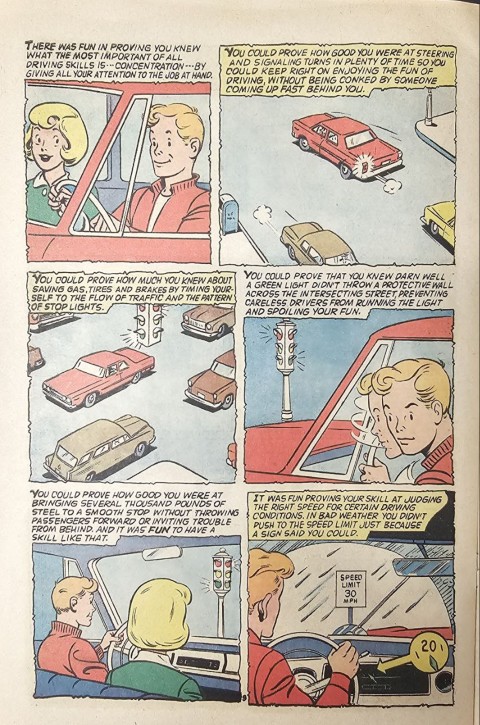
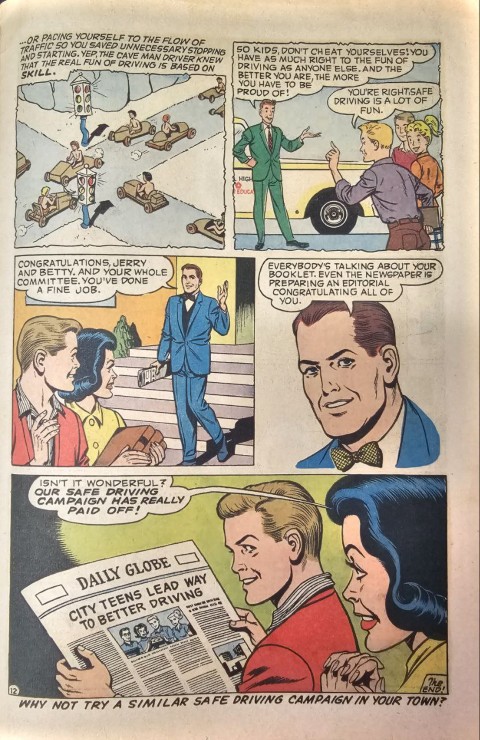
The story follows two high school students, Jerry and Betty, who begin to question what makes someone a truly good driver. While many teenagers associate driving with speed and excitement, their investigation leads them to a different conclusion. Through conversations with experienced drivers—from truck drivers to race professionals—they discover that the real satisfaction of driving comes from skill, concentration, and respect for the road.
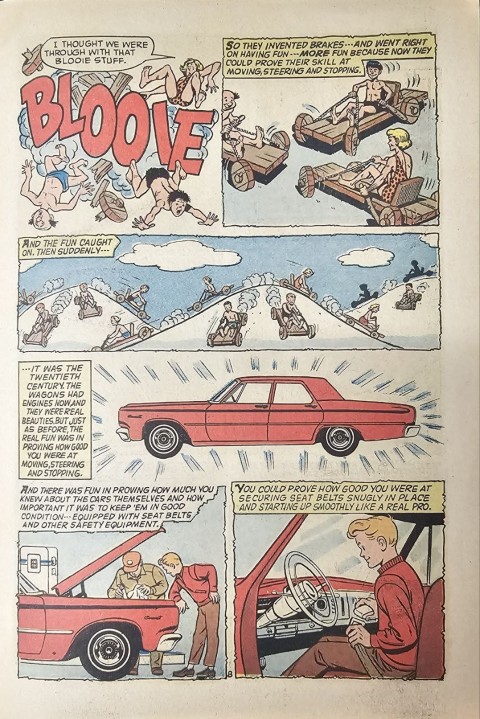
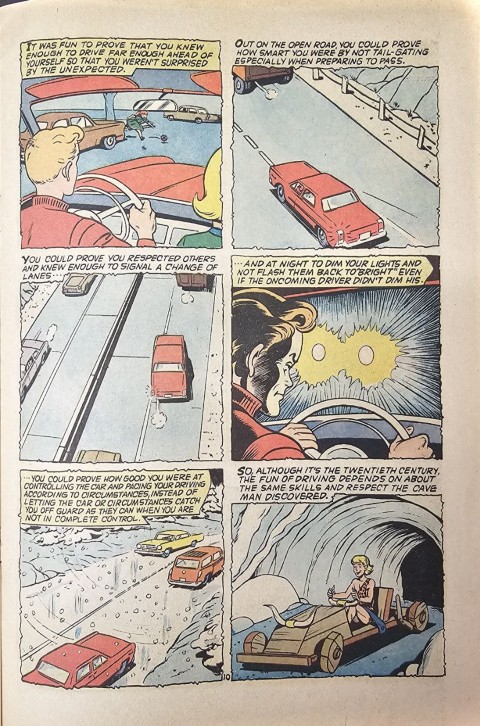
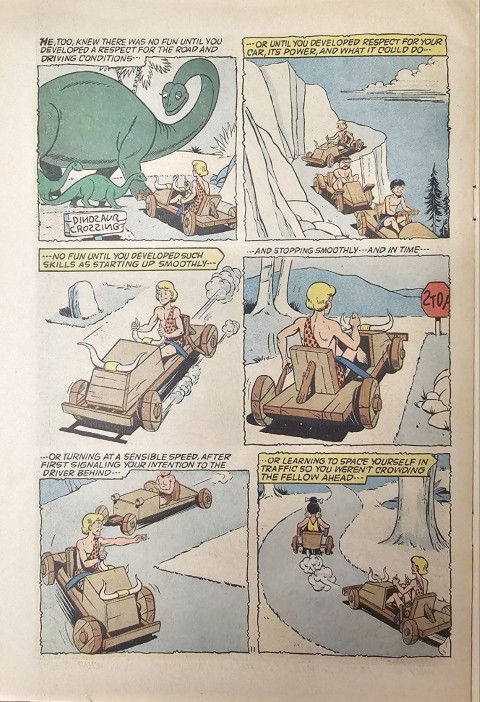
Throughout the comic, readers are reminded that driving well is something to take pride in. Smooth acceleration, careful braking, adherence to traffic signals, and anticipation of road conditions are presented as habits of confident, capable drivers. The message is clear: mastery and responsibility are what make driving enjoyable.
The comic also reflects a larger cultural moment. By the 1950s and 1960s, more teenagers than ever were learning to drive, and driver-education programs were expanding in high schools across the United States. Automakers had a strong interest in supporting these programs. Teaching safe driving helped protect their reputation while also introducing young people to their brands.
Publications like this one are an early example of integrated advertising—blending education, storytelling, and product promotion into a single medium. Readers might pick up the comic for the story, but along the way, they encounter Chrysler-Dodge’s ideas about safety, vehicle design, and responsible driving.
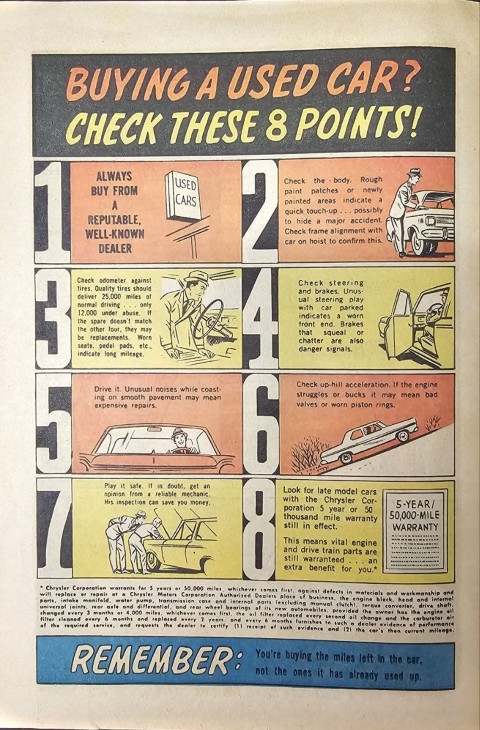
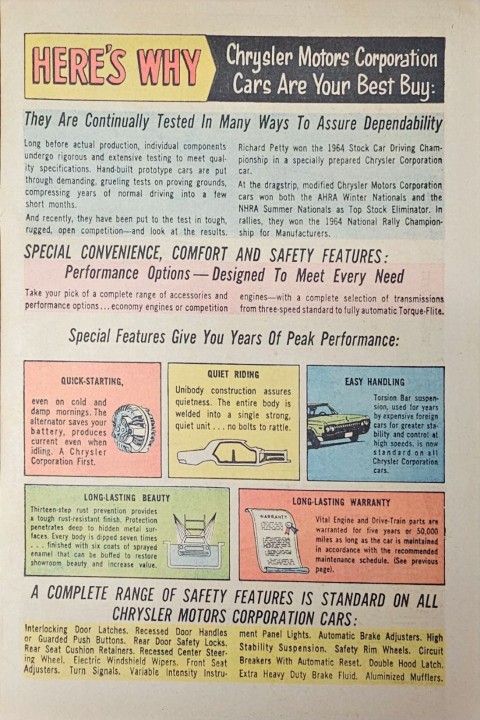
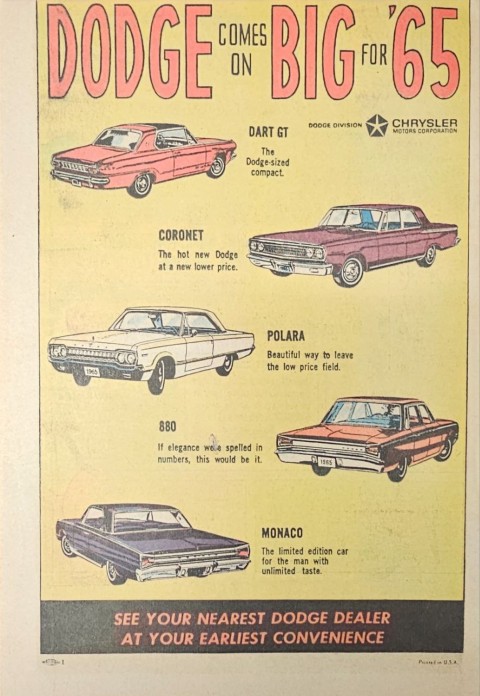
Near the end of the booklet, the educational message transitions into practical advice, including a checklist for buying a used car and reminders about vehicle maintenance. Finally, the comic closes with a look at the 1965 Dodge lineup, featuring models such as the Dart, Coronet, Polara, and Monaco. The shift from story to showroom is seamless, reinforcing the idea that Chrysler-Dodge vehicles were designed with the same care and safety principles promoted throughout the comic.
Today, pieces like The Real Fun of Driving offer a fascinating glimpse into how automakers communicated with young drivers during the golden age of American automobiles. They also remind us that advertising has long been about more than simply selling products—it has often aimed to shape attitudes, habits, and even culture.
Scroll through the pages of the comic below to see how Chrysler combined education, entertainment, and marketing in a uniquely mid-century way.