From the Archives: Matchbox Catalogs and Our First Automobile Literature
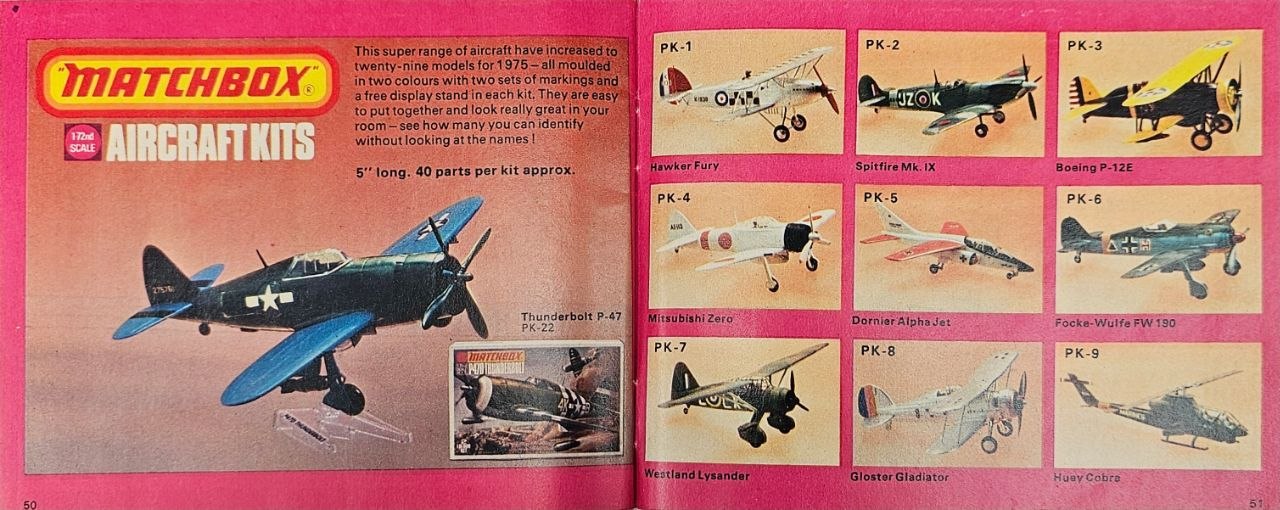
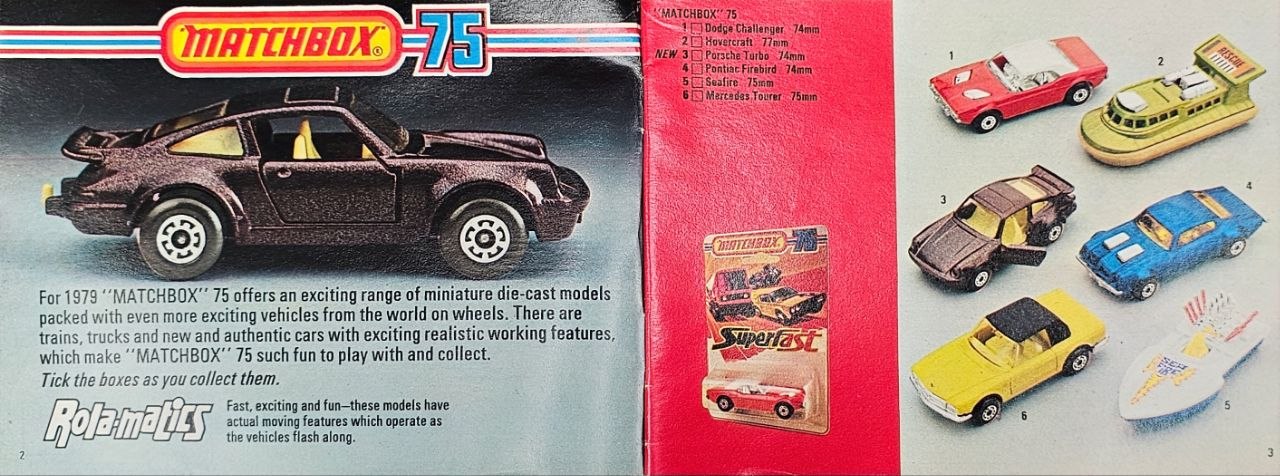
Among the automotive literature preserved in the Merrick Auto Museum archives are Matchbox collectors’ catalogs from 1975, 1977, and 1979–1980. At first glance, they may seem like an unexpected addition to an automotive library. Unlike the brochures, catalogs, and other literature produced by automobile manufacturers, these publications were intended for children.
Yet for many enthusiasts, Matchbox catalogs may have been the very first automobile literature they ever studied.
Founded in England in 1953 by Lesney Products, Matchbox became one of the world’s most successful die-cast toy manufacturers. By the 1970s, the company’s annual catalogs had evolved far beyond simple toy advertisements. They introduced young readers to hundreds of vehicles, taught them model names, encouraged collecting, and fostered an appreciation for transportation history.
One page in the 1979–1980 catalog captures this idea perfectly. Titled “Car Collecting – A Great Hobby for Young and Old,” it welcomes readers into the “Wonderful World of Matchbox Collecting” and notes that the hobby had grown so popular that enthusiasts of all ages were participating. The page also highlights the history of the famous Matchbox “1–75” range, explaining how the series evolved from its beginnings in 1953 while retaining its recognizable format.
In many ways, these catalogs functioned much like the sales literature produced by automobile manufacturers. Young collectors compared models, learned vehicle names, tracked new releases, and checked boxes beside vehicles they already owned. Long before they could drive, many children were already developing opinions about sports cars, trucks, construction equipment, emergency vehicles, and race cars.
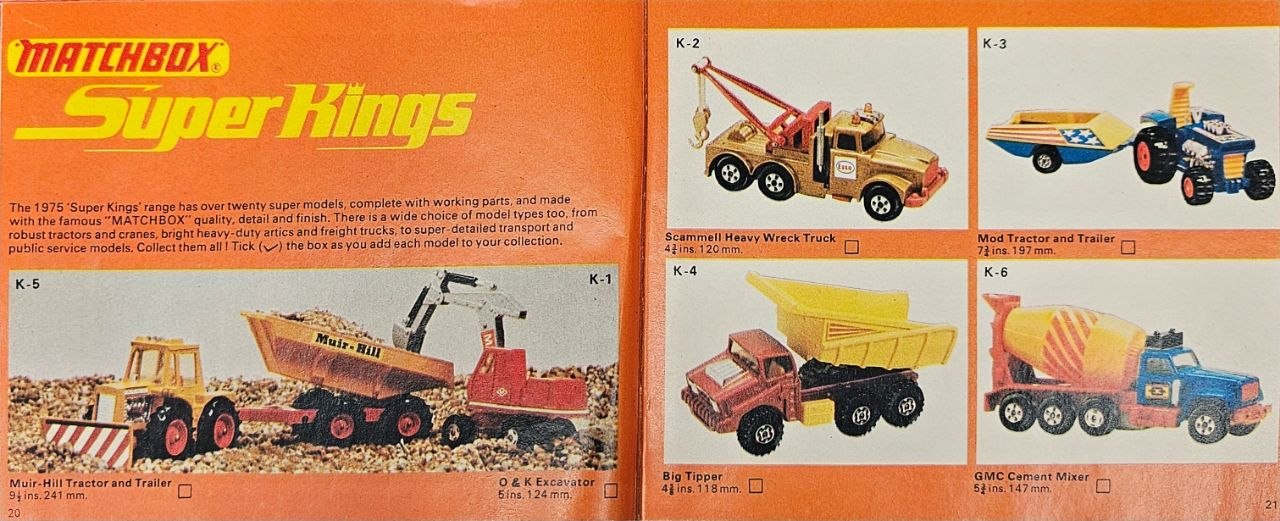
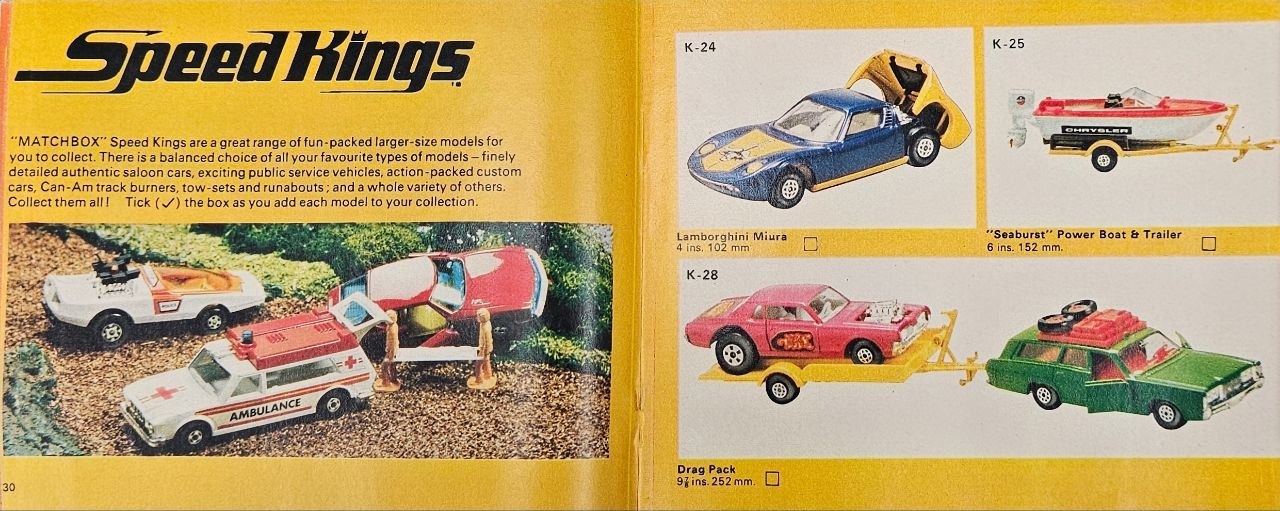
The 1970s catalogs reveal just how broad the Matchbox universe had become. The familiar Matchbox 75 range featured contemporary vehicles such as Dodge Challengers, Porsche 936 race cars, Lamborghini Countachs, Lotus Europas, De Tomaso Panteras, Mercedes Tourers, and a variety of trucks, buses, motorcycles, and utility vehicles. The larger Super Kings and Speed Kings lines expanded the selection with highly detailed vehicles featuring opening doors, moving parts, trailers, and accessories.
But Matchbox was no longer focused solely on automobiles.
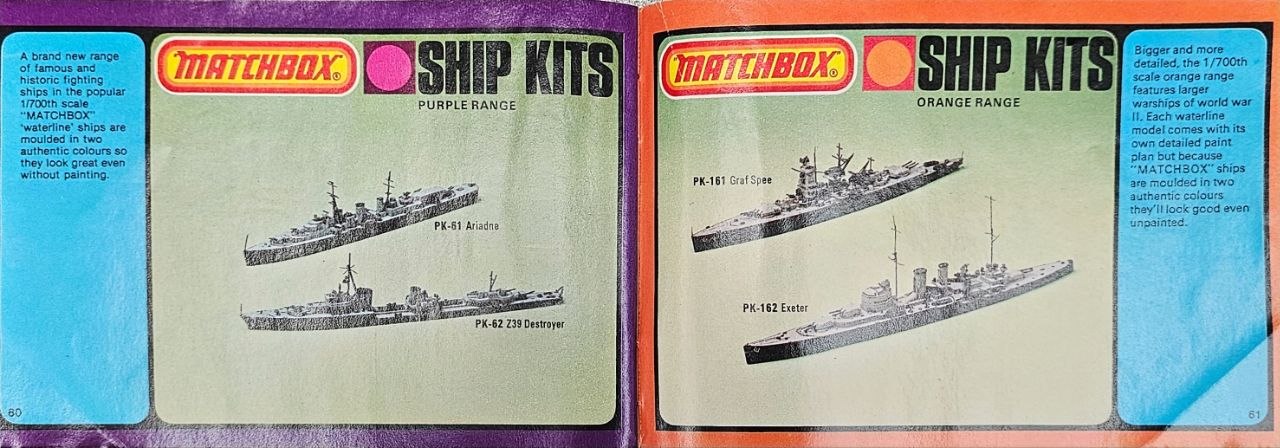
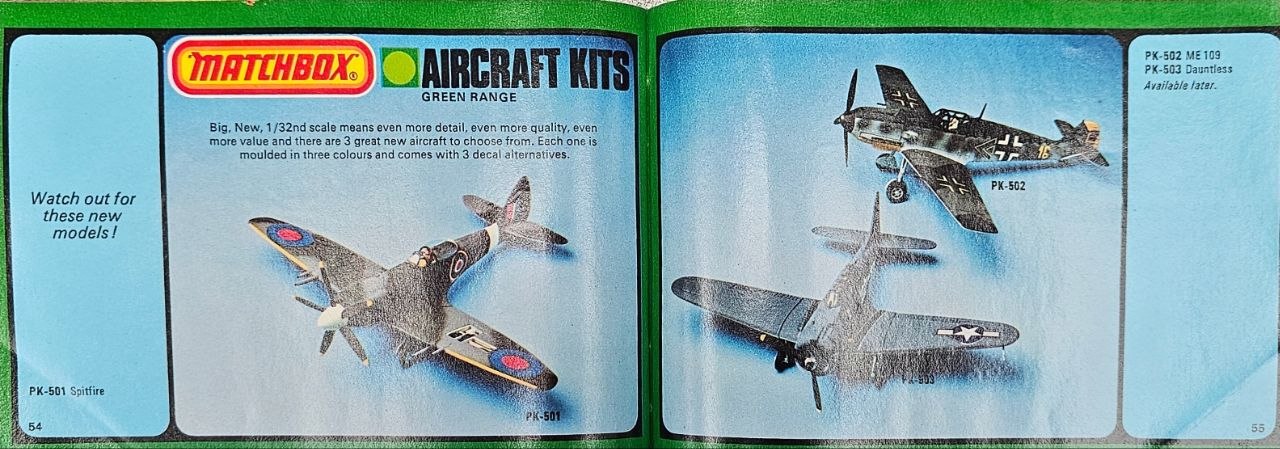
The catalogs included Sea Kings naval vessels, military-themed Battle Kings, aircraft kits, ship kits, racing track systems, and even action figure lines such as Fighting Furies. A licensed Walt Disney series brought Mickey Mouse, Donald Duck, Goofy, Pinocchio, Jiminy Cricket, and Minnie Mouse into the Matchbox family. These additions reveal a company seeking to compete across the broader toy market while still maintaining its automotive roots.
Perhaps the most fascinating section for an automobile museum is the Models of Yesteryear line.
While many toy companies concentrated on contemporary vehicles, Matchbox introduced children to automotive history. The catalogs featured miniature replicas of vehicles such as the 1911 Ford Model T, 1914 Prince Henry Vauxhall, 1934 Riley MPH, 1909 Opel Coupe, 1907 Peugeot, 1913 Cadillac, and 1912 Rolls-Royce. For many young collectors, these models may have provided their first exposure to veteran and classic automobiles.
In a sense, Matchbox was teaching automotive history through play.
A child could turn a page from a futuristic race car to a brass-era automobile built seventy years earlier. Without realizing it, they were learning that automobiles had a history worth exploring.
Looking back today, it is easy to see how these catalogs helped shape future enthusiasts. The habits encouraged by Matchbox collecting—studying photographs, comparing models, learning specifications, organizing collections, and researching vehicle history—are the same habits practiced by many adult collectors, restorers, and automotive historians.
That connection feels especially appropriate in an automobile literature museum. While many visitors remember collecting brochures, service manuals, or sales catalogs later in life, some of their earliest automotive reading may have been a Matchbox catalog spread across the living room floor.
The catalogs preserved in the museum archives remind us that a lifelong interest in automobiles often begins long before a driver’s license. For many enthusiasts, their first automobile literature wasn’t a factory brochure at all.
It was a Matchbox catalog.